Sound Healing for Neurodivergent Children
How Rhythm and Frequency May Support Focus
Many neurodivergent children struggle with regulation before they struggle with learning.
When a child feels overwhelmed, distracted or anxious, access to memory and focus reduces.
Sound healing for neurodivergent children offers one gentle way to support regulation before academic demands begin.
Why Sound Can Help
Sound is vibration moving through the body.
Frequency is the speed and pattern of that vibration.
Some children are highly sensitive to sound.
Others find certain rhythms deeply calming.
For neurodivergent children:
- Predictable rhythm can reduce anxiety
- Repetition can support attention
- Low frequencies may feel grounding
- Clear, simple tones can reduce sensory clutter
- The combination can support calm and mental clarity
The goal is not stimulation.
The goal is regulation.
Rhythm Before Learning
A steady drumbeat provides:
- Predictability that reduces uncertainty
- A steady sensory pattern the brain can organise around
- A pulse the body can physically feel
- Rhythm that steadies wandering attention
- An anchor when everything else feels scattered
Some children benefit from listening to rhythmic sound before or while doing some tasks.
The nervous system settles.
Focus becomes more accessible.
Focused Frequency and Calm
Tuning forks create clear, sustained tones at specific frequencies.
Some children respond positively to:
- Simple, uncluttered sound
- Gentle vibration
- Short sound breaks during longer tasks
Different frequencies feel different in the body.
Observation and experimentation are key.
Everyone is different, and each day is different, too.
Using Sound as a Study Support
Parents may choose to explore:
- A short rhythmic track before homework
- A consistent “start learning” sound ritual
- Gentle sound breaks between tasks (I ask my tutoring students what they feel would support them during our short break)
- Noticing which tones soothe and which overstimulate
- And using these when they feel they have too much or not enough energy/focus
When a child feels regulated, learning becomes more available.
Encouraging children to notice their own energy and signals, decide whether they need to up- or down-regulate, and choose which sounds support them builds lifelong self-regulation skills.
Watch the Video
In this video, I explain my experience of how Shamanic drums and tuning forks support regulation for AuDHD brains and why rhythm and frequency matter.
Curious to Explore?
Every neurodivergent child responds differently.
You might notice:
- Which sounds help your child settle
- Which sounds increase overwhelm
- Whether rhythm or sustained tone works best
- How their body responds during and after listening
- Be mindful, too, as there may be some sounds they don’t like, and that’s okay!
I would love to hear your observations in the comments.
Understanding your child’s sensory profile can change everything about how they approach learning.
Further Reading
If you are supporting a neurodivergent child, these posts may also be helpful:
- Working Memory and Neurodivergence: How memory load affects learning, emotional regulation, and classroom confidence.
- Gentle Re-Entry for Neurodivergent Minds: Finding Flow After a Break
Supportive strategies to help children transition back into learning without overwhelm.
When regulation improves, attention and learning follow more naturally.
A Broader Invitation
Finding the right frequency isn’t just about sound.
It’s about recognising that many neurodivergent people have been trying to adapt to expectations, structures, and systems that never truly fit.
When regulation improves, clarity follows. When environments align with our nervous systems, capacity expands.
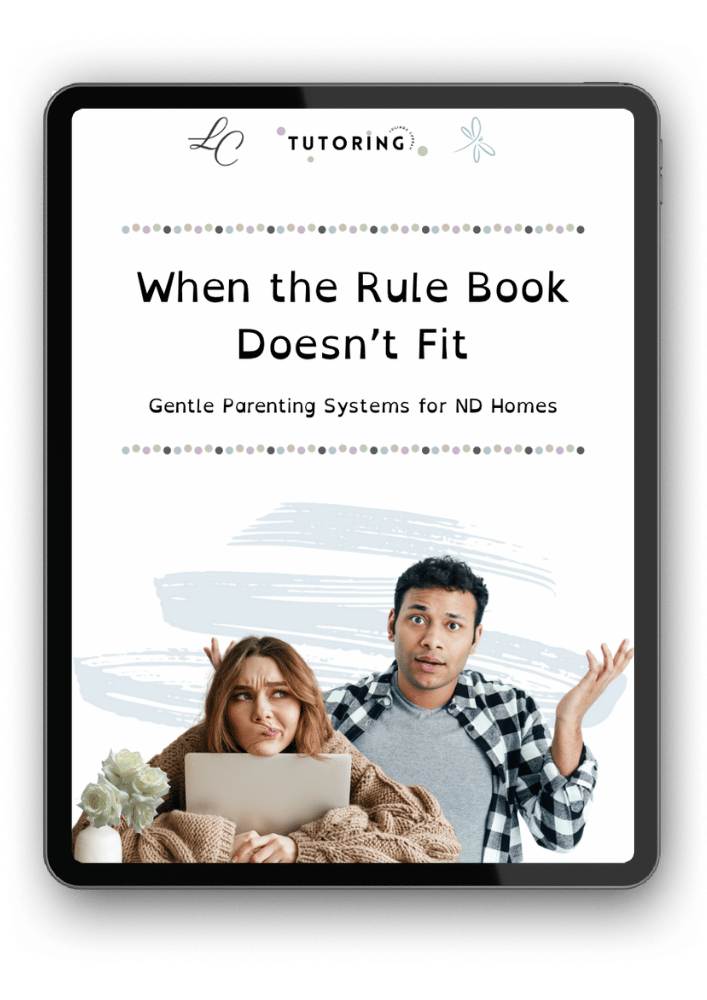
When the Rule Book Doesn’t Fit grew from that understanding.
It’s designed for parents, educators, and neurodivergent adults who are ready to gently question inherited templates and create regulation-informed approaches that honour how different brains and bodies actually function.
If this reflection resonated, you may find that this next step offers language, structure, and support for building systems that feel steady rather than strained.